

In our latest blog article, we explored the practice of dogfooding and how company-wide, in-house testing helps us sharpen product quality and ensure the best possible experience for our clients. But testing is only one side of the equation. If dogfooding strengthens what we already have, internal innovation pushes us toward what we haven’t built yet. Innovation and forward-thinking product design are just as central to our culture as quality assurance. They shape the way we imagine future features, improve existing systems and products and challenge ourselves to think beyond our current roadmap.
Last month, we took this commitment a step further by organizing a hacking competition, a multi-week initiative designed to bring people from different engineering teams and business areas together. The mission was simple, yet ambitious: collaborate, experiment and explore new ways to enhance our products, platforms, and/or processes. For 20 days, Blippers across backend, frontend, DevOps, QA, product and more disciplines dedicated focused time to building prototypes and demos, validating ideas and reimagining the future of our business.
Creating Blip Labs
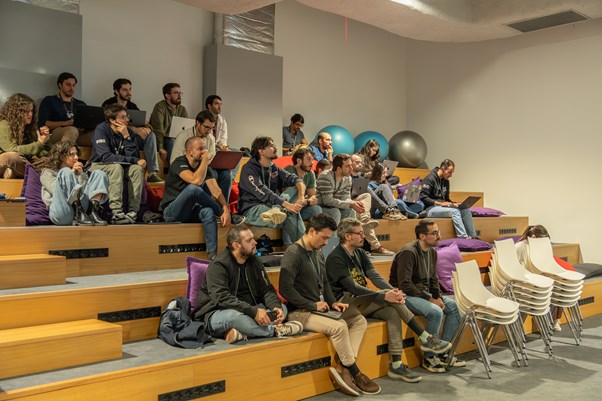
Hackathons and short-term innovation events have been part of the tech playbook for years. Traditional 24-hour sprints or rapid design challenges are great for generating quick ideas and fast prototypes and they’ve produced meaningful results in the past. But for teams who still need to deliver on their day-to-day commitments, we wanted an internal model that was both sustainable and impactful, to generate innovative ideas.
We reimagined the format, creating an experience that preserves the excitement of a classic hackathon, while giving participants the time to dive into complex problems, validate architectural decisions and build thoughtful demos, all without disrupting the rhythm of the business.
And that’s how our hacking competition, Blip Labs, came to be. We supported Blippers in forming cross-functional teams, paired them with mentors to guide them, especially during the early ideation and architecture phases and then we stepped back. From there, it was up to our people’s brilliant minds to imagine, design and build.
What followed was three weeks of design sessions, coffee fuelled commits and spontaneous idea-sharing huddles and meetings.
Organizing the Competition
To prepare for Blip Labs, we first defined the competition stages and ensured that both the overall flow and the final event would be engaging for participants. We opened the application period and hosted an initial session to explain the format and introduce the participating teams and mentors. Throughout the competition, we held check-ins to assess progress and provide guidance. We set the submission deadline and organized a final ceremony, where teams presented their projects to the judges.
Along the way, we also created communication channels - including a dedicated Slack space - to keep participants informed about all competition-related updates. The channel was open to the entire company, not just the teams involved, because we wanted everyone to be part of the conversation, encourage participants and actively contribute to shaping new ideas.

Why a Multi-Week Format?
- Production-grade demos
Many of the final projects included fully functional demos, explanatory walkthrough videos and even the development of mobile applications, showcasing to the judges not just the concept, but the real potential of each idea.
- Cross-collaboration
Engineers, product managers, designers, DevOps specialists and QA engineers worked side by side with the organizing team, judges and mentors to ensure that even early-stage prototypes delivered real user value. This collaboration enabled meaningful usability testing, code reviews and architectural discussions, while still dedicating time to frontend polish, user experience design and product development.
- Culture of innovation
The extended format encouraged the habits we want our product culture to embody: experimentation, continuous testing and validation and a strong focus on the client experience throughout the product development process. It also gave us the opportunity to actively celebrate technical curiosity, pushing people out of their comfort zones and beyond their usual tools and frameworks, motivating them to explore new technologies and new ways of thinking.
How the Competition Worked
Teams were free to tackle any domain from new product development, enhancements to existing platforms, automation of internal processes, or architectural improvements. The only criteria were:
- The idea must have real business potential
- The idea must be functional, not hypothetical
- Collaboration should be at the center of the project/idea development
At the end, every team pitched their project to a panel of judges composed of engineering leads, directors and cross-functional experts.
Awarding the Winners
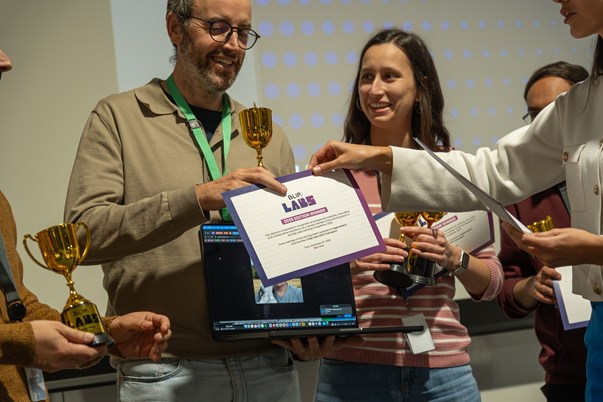
It wouldn’t be a competition without winners. After weeks of hard work, we closed Blip Labs with a final ceremony where all teams presented their ideas to a panel of jury members. It was a moment to celebrate the innovation Blippers brought to life and to recognize not only the overall winner, but also outstanding achievements across multiple award categories, each highlighting a different dimension of innovation and product development:
- Best Project (Overall Winner)
The Best Project was awarded to the idea that stood out the most in vision, execution, impact and presentation.
- Best Customer Experience
The Best Customer Experience recognized the project that delivered the most intuitive and thoughtful experience for clients. This category celebrated the solution that best understood clients’ needs and transformed them into engaging journeys.
- Best Technical Innovation
The Best Technical Innovation was awarded to the project that pushed the boundaries of engineering through creative architecture and problem-solving. It highlighted technical excellence that expands what’s possible within our product ecosystem.
- Best Pitch
The Best Pitch prize was awarded to the team that best communicated their vision with clarity, confidence and engagement. This category recognized members who made their solution compelling, easy to understand and inspiring to the public.
- Best Collaboration
The Best Collaboration Award celebrated the team that best represented cross-functional partnership. This award was given to Blippers who combined diverse skills and projects to bring new perspectives to their presentation.
- Blip Community Favorite
Chosen live during the event directly by the Blip community, this award reflected the project that captured the company’s enthusiasm and imagination. It represents creativity, relevance and the ability to resonate with people cheering on the sidelines.
Blip Labs: Where People Meet Innovation
After three weeks of brainstorming and building, it became clear that innovation flourishes when people are given the time and freedom to think boldly, either about our existing products and processes or about entirely new possibilities. The extended format, unlike the typical 24-hour events, enabled teams to architect with intention, integrate with real systems, test and refine their concepts into prototypes strong enough to spark conversations about actual deployment. Collaboration was just as essential: when backend, frontend, DevOps, design, QA and product representatives, with different seniorities and experiences came together, we saw smarter decisions, client-focused thinking, fewer bugs and errors and solutions that brought value to the business.
These weeks reaffirmed that innovation is not an isolated event but a cultural habit, one that values curiosity, encourages breaking routine and empowers Blippers to stretch into their full creative and technical potential. By bringing everyone into the conversation about what our future could look like, we not only surfaced powerful ideas but also deepened collective understanding of our market and business.
This hacking competition reshaped our sense of what internal innovation can achieve. The quality of the prototypes, architecture, frontend work and product development demonstrated real market potential, but even more importantly, it strengthened connection within our teams. The insights and energy generated throughout this experience will continue to shape what we build next.
We are certain this is only the beginning of future Blip Labs editions.
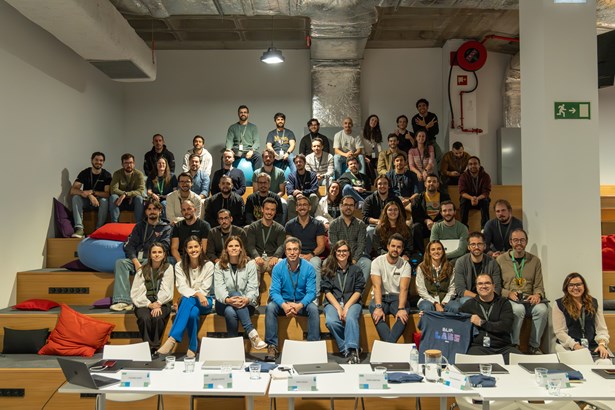

Luís Miranda, Mafalda Marques, Ana Carvalho


